
The Intersection of Blockchain and Provably Fair Gaming: Trust, Transformed
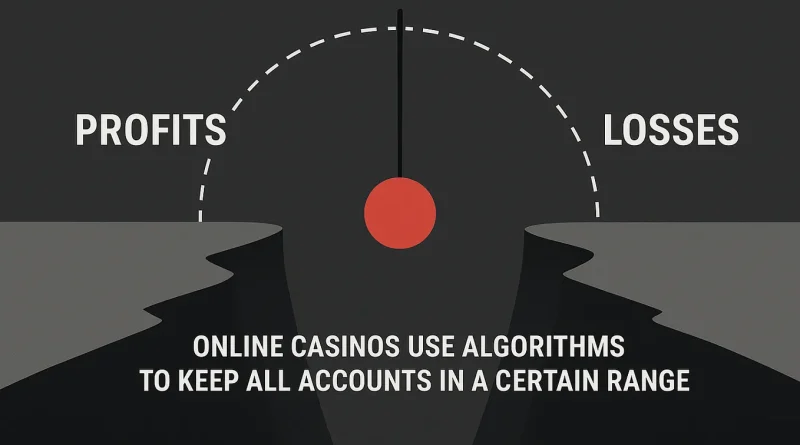
Let’s be honest for a second. When you click “spin” on an online slot or place a bet in a digital card game, you’re taking a leap of faith. You’re trusting a black box—the casino’s software—to play fair. The house always says it does, of course. But how can you really know? That gnawing question, that fundamental lack of verifiable trust, has been the Achilles’ heel of online gaming since its inception.
Well, that’s changing. And it’s changing because of a seemingly unrelated technology: blockchain. The intersection of blockchain and provably fair gaming mechanics isn’t just a techy niche anymore. It’s a quiet revolution, rebuilding the very foundation of how games of chance operate. It swaps blind faith for cryptographic proof.
What “Provably Fair” Actually Means (And Why It Matters)
First, let’s demystify the core concept. Provably fair gaming is a system where every single game outcome can be independently verified by the player after the fact. Think of it like a tamper-evident seal, but for digital randomness. You don’t have to trust the operator’s promise; you can check the math yourself.
Traditional online casinos use a Random Number Generator (RNG) certified by third-party auditors. That’s good, sure. But the audit happens privately, maybe once a year. The player gets a certificate, not proof. Provably fair tech, in contrast, gives you the tools to audit every single bet you make, in real-time. It’s the difference between being shown a food safety certificate and having a live video feed of the kitchen.
The Old Way vs. The New, Verifiable Way
| Traditional RNG System | Blockchain-Powered Provably Fair System |
| Trust delegated to a third-party auditor. | Trust is decentralized; verification is public. |
| Outcome generation is opaque to the player. | Players can cryptographically verify each outcome. |
| Data stored on private, centralized servers. | Transaction & game logs are immutable on a public ledger. |
| Withdrawals can be delayed or disputed. | Smart contracts enable near-instant, automatic payouts. |
How Blockchain Makes Provable Fairness Possible
This is where the magic happens. Blockchain isn’t just cryptocurrency—it’s a public, unchangeable record book. This architecture solves the two biggest hurdles for provable fairness: transparency and immutability.
Here’s a simplified breakdown of a typical process, say, for a dice game:
- The Commitment: Before your roll, the game platform generates a secret random seed and a public hash (a cryptographic fingerprint of that seed). It posts the hash to the blockchain. This is its “commitment.”
- Your Move: You place your bet, choosing a number. This action is also recorded on-chain.
- The Reveal: After you bet, the platform reveals the original secret seed. Now you have all the pieces: the seed, your bet, and the game algorithm (which is open-source).
- Your Verification: You (or a verifier tool) can now run the algorithm using the seed and your bet input. It should generate the game’s outcome. Then, you check that the seed matches the initial hash commitment. If it does, you know the outcome was predetermined before your bet and couldn’t be altered. It’s a sealed envelope, opened in public.
The blockchain’s role? It timestamps and locks in that initial hash, making it impossible for the house to change the seed after seeing your bet. It’s the ultimate witness.
The Tangible Benefits: More Than Just Crypto Buzzwords
Okay, so the tech is clever. But what does this mean for you, the player? The advantages are, frankly, substantial.
Unprecedented Trust & Player Empowerment: This is the big one. The psychological shift is massive. You’re no longer a passive participant hoping for fairness. You become an active verifier. This builds a level of credibility that no marketing slogan ever could.
Reduced Costs & Faster Payouts: By using smart contracts in online casinos, the entire process—from wager to payout—can be automated. No more manual withdrawal reviews that take days. The code executes the rules, and if you win, funds are sent automatically. This slashes operational overhead for operators, too.
True Ownership of Assets: In blockchain-based games, your in-game items (cards, skins, collectibles) are often non-fungible tokens (NFTs) you truly own in your digital wallet. You can trade or sell them freely, a concept that’s reshaping the entire gaming economy. This is a huge leap towards decentralized gaming platforms.
It’s Not All Perfect… The Current Hurdles
Now, we have to address the elephant in the room. The user experience can be… clunky. Managing crypto wallets, understanding gas fees, and navigating the verification process (even with tools) has a learning curve. It’s a barrier for the mainstream audience used to one-click deposits.
Regulation is also a wild west. The decentralized nature of these platforms creates jurisdictional tangles. And honestly, the sheer novelty means some projects are more promise than polished product. Due diligence is still crucial.
The Future: Where Is This All Heading?
The trajectory is clear. As layer-2 scaling solutions make transactions faster and cheaper, and as wallet UX improves, the friction will fade. We’re already seeing hybrid models—traditional online casinos offering “provably fair” game modes alongside classic RNG titles.
The real endgame might be a complete paradigm shift: player-owned gaming ecosystems. Imagine decentralized autonomous organizations (DAOs) governing game platforms, where stakeholders vote on rules and house edges. The line between player and operator blurs.
In fact, the concept of cryptographically verifiable gaming outcomes is spilling over. It’s influencing e-sports, fantasy leagues, and any digital system where transparent randomness is valuable.
A Final, Simple Thought
At its heart, this intersection isn’t about complex cryptography or speculative crypto assets. It’s about restoring a balance. It’s about giving the player a seat at the table, with a flashlight to see the dealer’s cards. Technology, for once, is building a bridge of trust instead of a wall of complexity. The game, it turns out, can be fair. And now, you can prove it.